The museum -
Like a live concert with the whole family
The rock’n’pop museum in Gronau has been telling the cultural history of popular music of the 20th century since 2004. Since the end of 2018, the historic building has been shining in new splendor: Hear, see, feel is the museum’s motto.
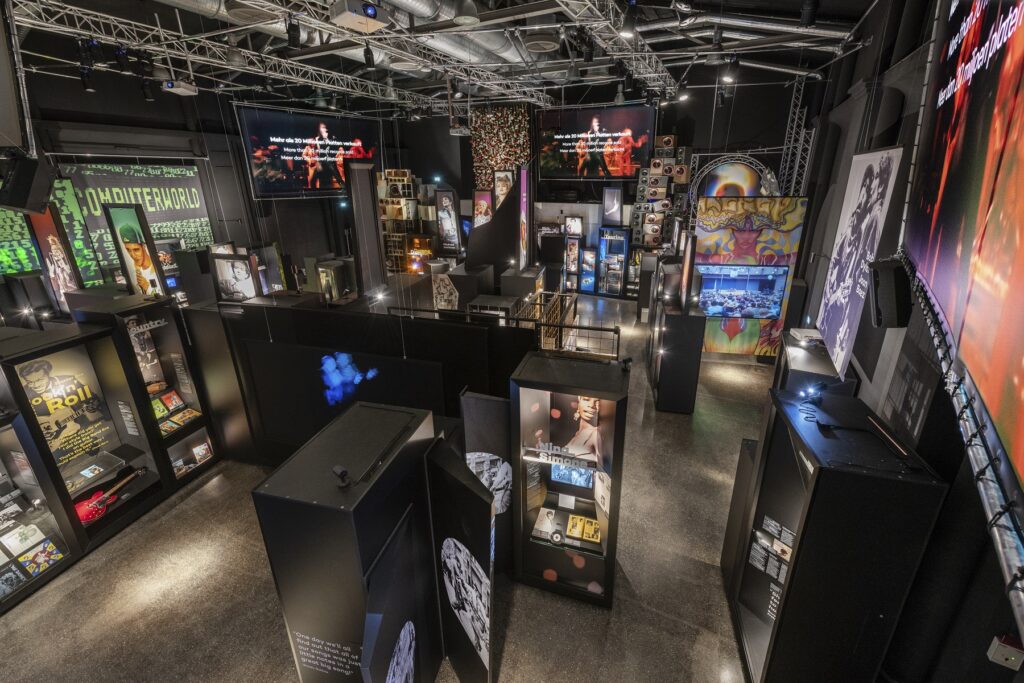
Permanent exhibition
Hear, see, feel
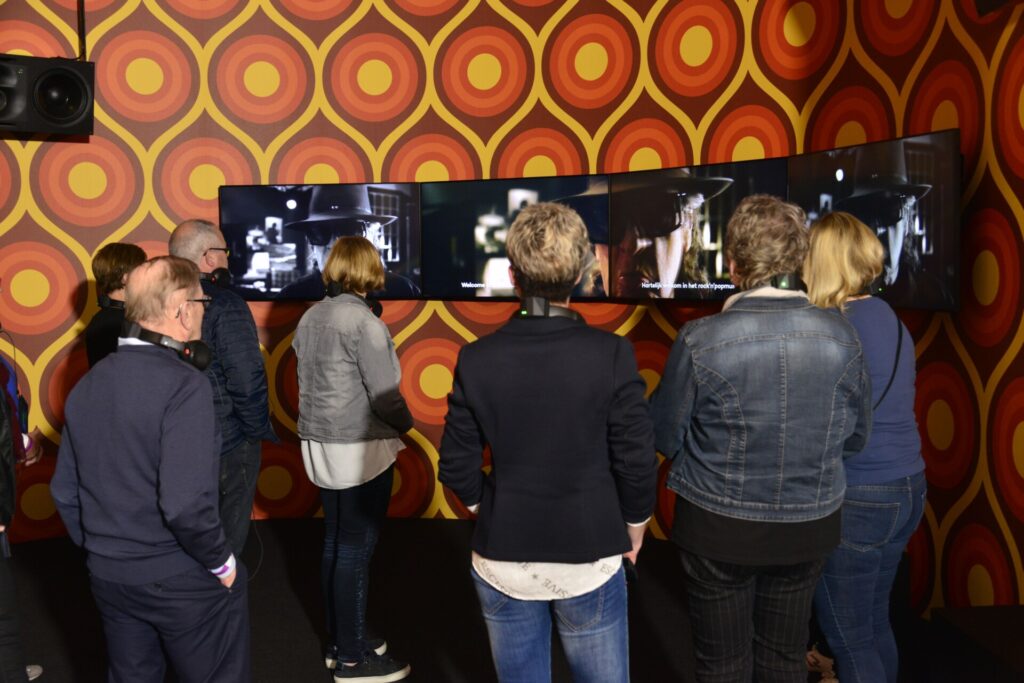
With its exhibition concept, the rock’n’popmuseum creates goosebump moments like at a live concert. In the exhibition, all age groups will find a multimedia experience of sounds, images and exhibits. Multimedia and interactive elements make the visit an unforgettable experience. A highlight awaits visitors right at the entrance: Gronau’s most famous son, rock legend Udo Lindenberg, greets everyone in person on a multi-monitor animation.
Visitors can look forward to a thematically and creatively fascinating journey through the dimensions of pop music. Elaborately staged showcases form themed islands grouped around concepts such as rebellion, live on stage and performance.
High-ranking relics of pop music and an innovative sound system round off the unique exhibition concept.
Our special thanks go to Udo Lindenberg and the L’Unique Foundation.
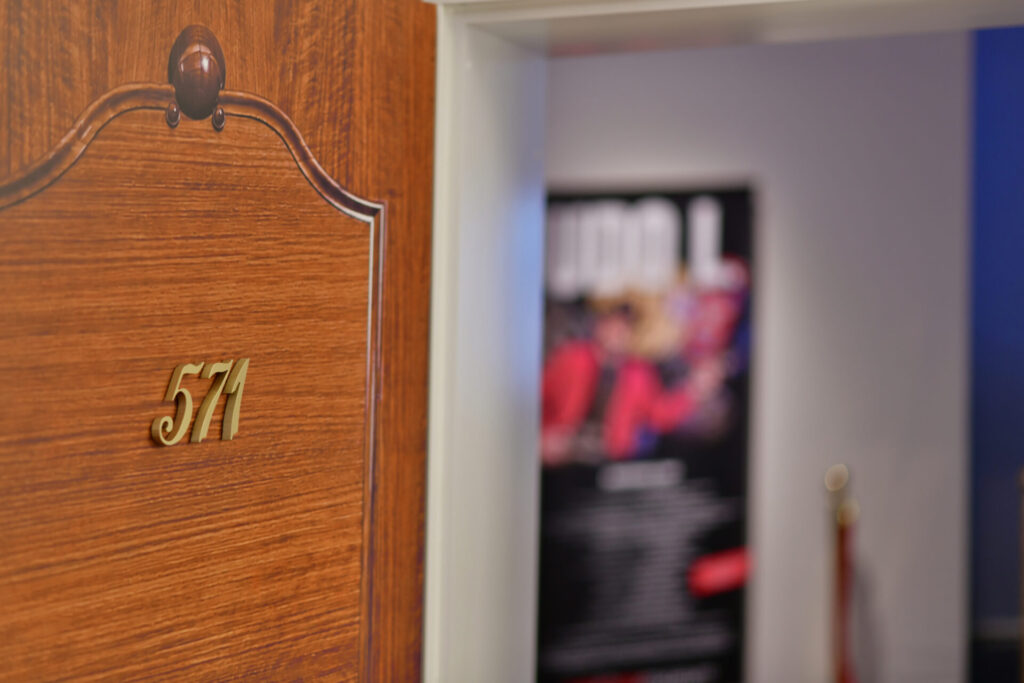
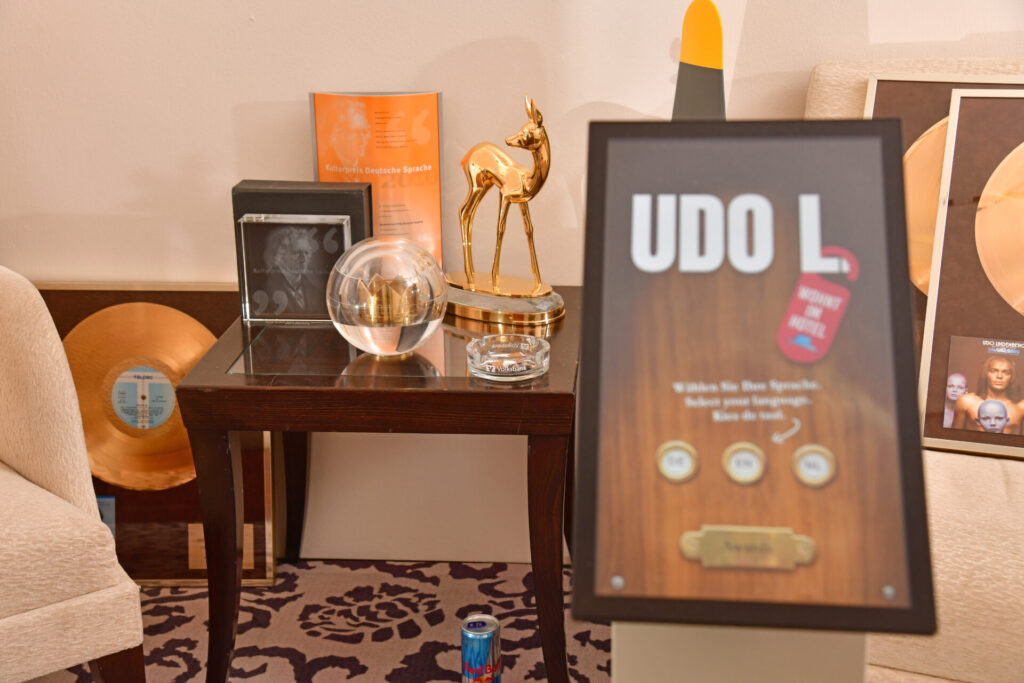
New special exhibition!
"Udo L. Lives in a Hotel – Exclusive Glimpses into My Panic Center"
On display at the Rock 'n' Pop Museum through the end of the year
Udo Lindenberg turns 80 – and the rock’n’pop museum invites you to the place where legend becomes everyday life: the Hotel Atlantic. From June 4, 2026, the new special exhibition “Udo L. lives in the hotel – exclusive insights into my panic headquarters” will open a door that was previously closed – directly into the life of Germany’s greatest rock musician.
You can’t get any closer!
The exhibition is not a classic retrospective. It is a backstage pass into the hitherto unknown everyday life of the panic rocker. Visitors become guests at the Hotel Atlantic – and accompany Udo through his very own rhythm from night to day, between inspiration, icon status and surprisingly down-to-earth moments.
At the center is the original hotel room from Hamburg – a retreat, creative laboratory and legendary headquarters of the Panik family. A multi-layered world of experience unfolds around it, in which original exhibits, media productions and interactive formats show Udo Lindenberg away from the limelight. Visitors become part of Udo’s life, the atmospheric interior design makes Lindenberg’s artistic processes visible and they can get to know personal facets of the star that were previously barely visible. Surprising encounters are an explicit part of the concept: whether a scene in the hotel bar, a moment in the corridor or a surprising look behind the scenes – the exhibition deliberately plays with closeness, intimacy and the myth of Lindenberg.
The realization of this extraordinary exhibition, curated by Dr. Thomas Mania and Frank Bartsch, is made possible by the support of the Federal Government Commissioner for Culture and the Media, the Brost Foundation, the State of North Rhine-Westphalia, the City of Gronau and the Friends of the rock’n’popmuseum e.V.
CAN-Studio
PRESENTATION
Popular music is closely linked to the recording studios in which it was created: The Beatles – unthinkable without the Abbey Road Studios in London. The typical sound of 90s boybands: it came from the Swedish Cheiron Studios. Without the Jamaican sound labs of King Tubby and Lee “Scratch” Perry, no Dub.
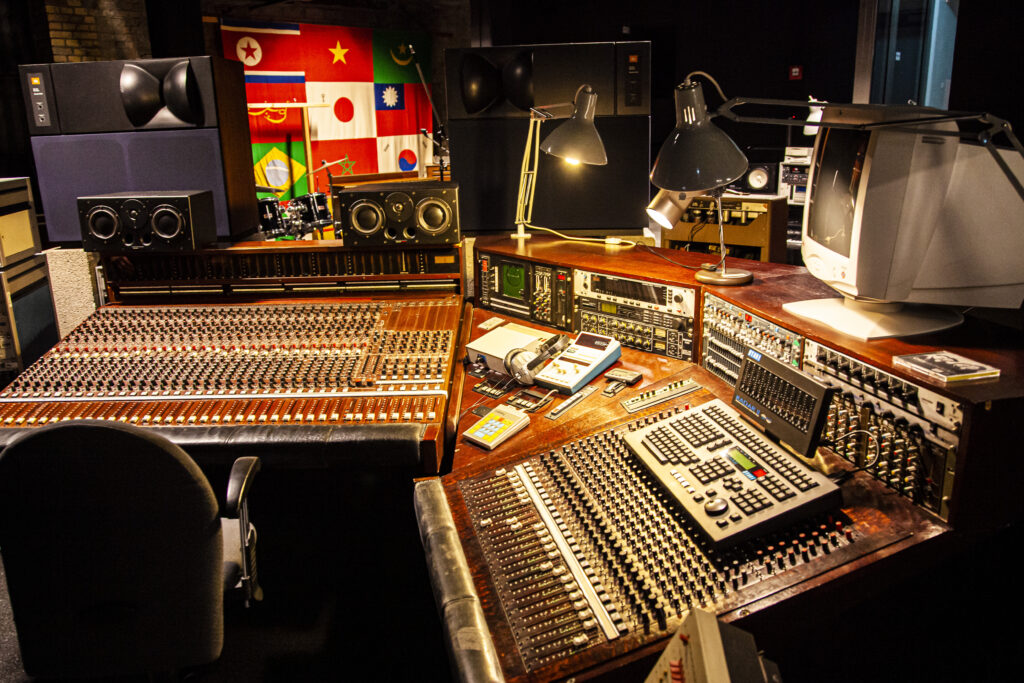
The CAN studio also played a central role – not only for the music of the band that gave it its name, but also for German and international pop music. The atmosphere, the acoustics, the special technical equipment and the personalities of the performers all played their part in the music that was created here.
In 1971, CAN moved from their rehearsal rooms in Nörvenich Castle to a former movie theater in the community of Weilerswist. They had earned money with commissions for film music and now wanted to create their own creative space.
The band consisted of Irmin Schmidt, Jaki Liebzeit, Holger Czukay and Michael Karoli. Malcom Mooney Damo Suzuki are the best known of their changing singers. Some of them had studied with Karl-Heinz Stockhausen, who had attracted attention at the time with his studio experiments. Now they were turning rock music on its head themselves: They swapped instruments, were influenced by non-European music and always had a tape running during their jams, the parts of which were later remounted.
In order to be able to rehearse day and night, they lined the hall with seagrass mattresses from German army stocks. This provided a shield from the outside world and thus well-meaning neighbors. A nice side effect was the “dry” sound, i.e. little room content on the recordings. Nevertheless, the band also made a point of recording “atmosphere”: The creaking of a chair or the sounds from the garden. Colorful, psychedelic cloths were hung over the mattresses, and you could take a seat on corner seats and couches everywhere.
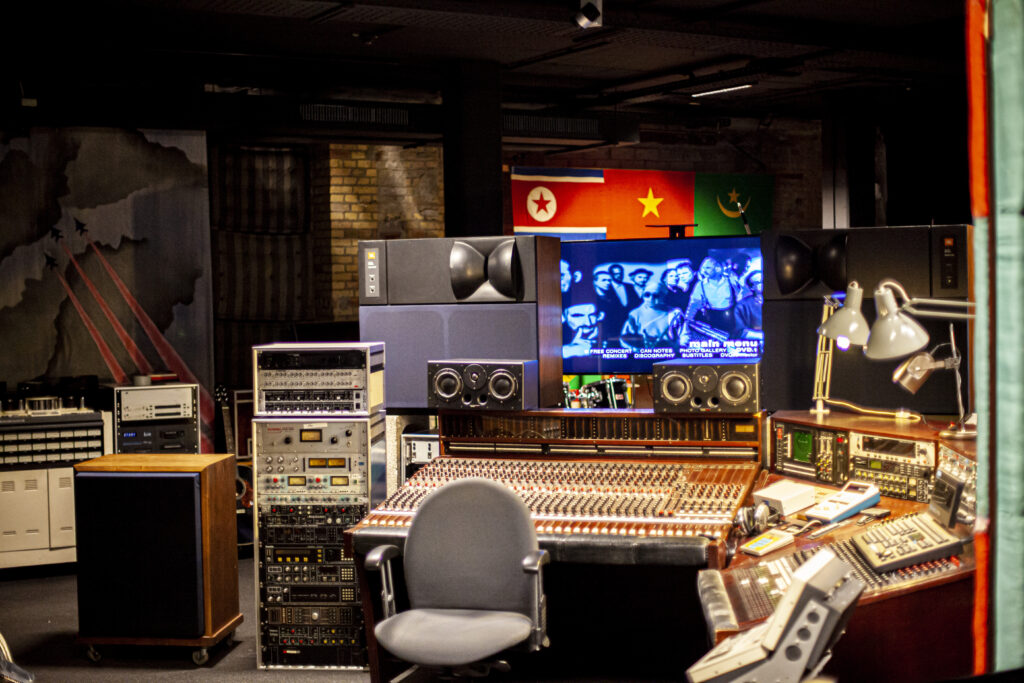
However, the structure of the “Inner Vision Studio”, as it was initially called, was remarkable: The control room and recording room were not separate. The 8-channel mixing console, on which CAN’s early albums were recorded, was positioned in the middle of the room. This system was also preserved later. Until the mid-1970s, the band’s technical equipment remained modest; there was not much room for correcting mistakes or elaborate miking. In retrospect, the band members summed up that the sound was shaped by both: The special space that the studio offered and the limitations of the technology.
In 1978, after the dissolution of CAN, René Tinner took over the studio. He had previously worked in Weilerswist and, after a brief interlude in another studio, returned with an idea: he wanted to turn the experimental space into a commercial music studio. Things really got going in the now renamed CAN-Studio after the first hit: Joachim Witt took off with “Silberblick”, which was recorded there. He used the proceeds from this production to finance the purchase of the CS-V mixing console, which forms the core of the collection in the rock’n’popmuseum.
This was followed by national and international acts produced by Tinner, who appreciated the unique atmosphere of the room. Tinner’s biggest production was probably Fury in the Slaugtherhouse and Double Marius Müller-Westernhagen. His successful album Hallelujah was created in the CAN studio. As CAN had already recorded their jams, the live feeling of the band was also in the foreground here.
Over the years, the studio had developed into a professional powerhouse: 24-track machines, a Hammond organ, dozens of synthesizers from analog to digital. This highlight of the equipment, on which the studio moved to the rock’n’popmusem in the mid-2000s, can be explored in the basement of the rock’n’popmuseum.
- Here you can discover culture and education in your city!
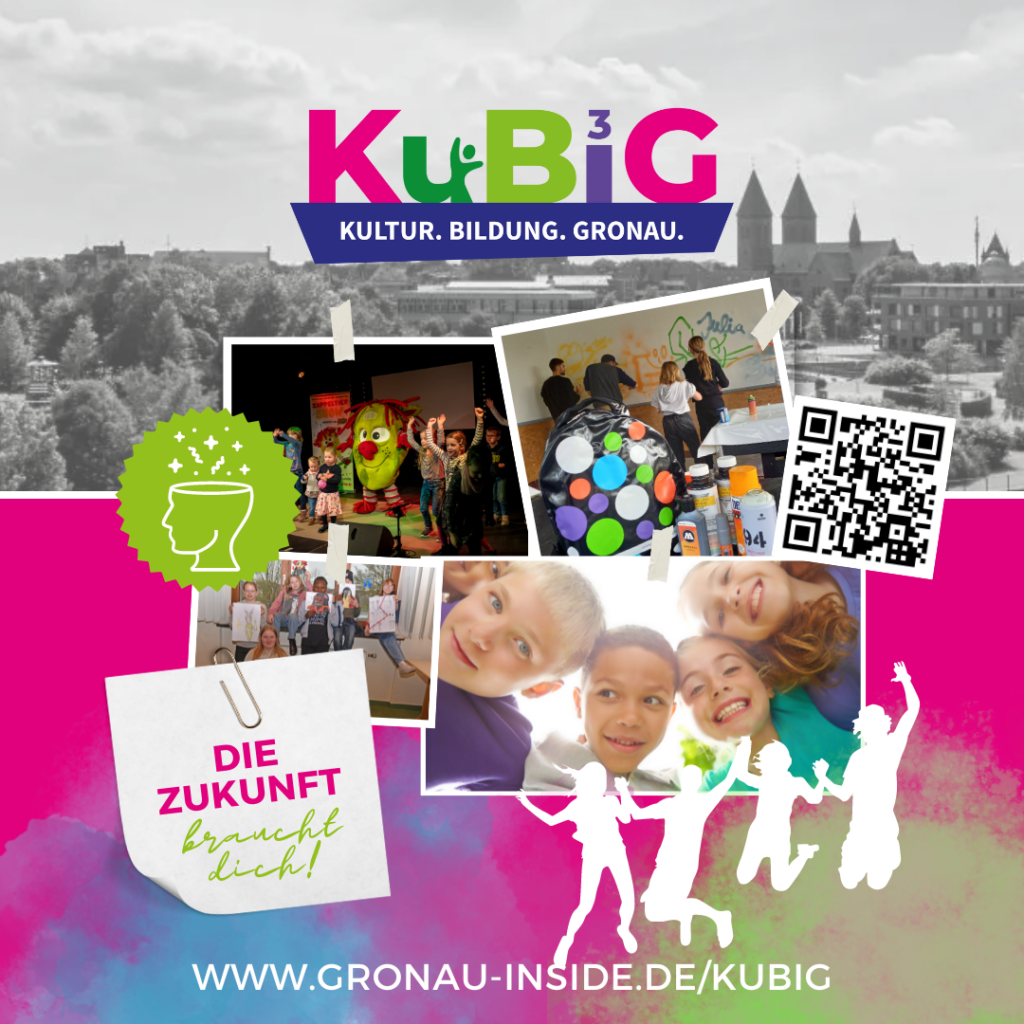
KuBiG brings together culture enthusiasts and interested parties, promotes the diversity of creative forms of expression and offers a wide range of creative activities and projects, especially for children and young people, at various locations and in cooperation with a constant stream of new partners.
Under this label you will find a variety of cultural educational offers in Gronau and Epe. Whether you are a kindergarten child, a teenager, a young family or an adult – there is something for everyone here, whether in a group or as an individual.
Together, we are creating a vibrant cultural landscape that not only contributes to personal development, but also to social participation.
Become part of this movement and help make Gronau a place where culture and education go hand in hand.
The NRW state government supports the development of cultural network structures at municipal level and promotes cities, municipalities and municipal associations that work systematically on the quality of their cultural education landscape through the “Municipal Overall Concepts for Cultural Education” award. The aim is to open up opportunities for all children and young people to encounter art and culture and to develop an interest in the diversity of cultural life. The overall municipal concepts are intended to demonstrate the systematic further development of cultural education as well as a coordinated and joint approach by politics and administration in culture and education.
Gronau took part in the competition for the first time in 2022 and was able to convince the jury of the concept it had submitted with its first pitch. The Minister for Culture and Science of the State of North Rhine-Westphalia, Ms. Ina Brandes, took the opportunity to present the award in person. The 15,000 euros in funding associated with the award will be used over the next two years for cultural education projects in the city and will help to build a strong and active cultural network.
In 2024, the cultural institutions in Gronau once again took part in the competition for an overall municipal concept for cultural education organized by the Ministry of Culture and Science in NRW.
The presentation of network activities relating to cultural education, children and young people, the further development of the network’s visibility for artists and future plans are described in an extensive
contribution has been documented. The efforts of the Kulturbüro Gronau GmbH and the rock’n’popmuseum GmbH as representatives of the cultural activists in Gronau were honored by Minister Ina Brandes at the beginning of the year.



Café Backstage
The café lives up to its name.
Such a journey through the world of rock and pop can make you hungry and thirsty. Café Backstage offers the perfect setting for anyone who wants to relax and review their impressions over a tasty snack. Good music, a rustic-charming interior, a lovingly placed musical detail here and there. The café lives up to its name.

L'Unique Foundation
Celebrity Art and Rock Memorabilia
L’Unique Foundation is a charitable foundation based in Basel (Switzerland). The foundation manages one of the most important private collections of celebrity art and rock memorabilia. Parts of the collection are also exhibited here in the rock’n’pop museum. The purpose of the foundation is the realization and maintenance of humanitarian aid projects worldwide – especially in the areas of groundwater supply, sanitation and hygiene. The aid projects strive for the greatest possible sustainability and pursue an intensive involvement of the local population and user groups, such as in Kathmandu and the Nuwakot region (both Nepal).
In collaboration with selected wineries, the Foundation presents exclusive, limited-edition, high-quality Italian wines with a touch of rock’n’roll. The labels of these limited wine editions were designed by US artist John Douglas. With the purchase of each bottle you automatically support the aid projects of the L’Unique Foundation with an amount of CHF/EUR 5.
You can order the wines and the graphics by John Douglas in the Foundation Shop.
Freundeskreis e.V.
A museum needs friends!
The association supports the activities of the Rock and Pop Museum in financial, conceptual and publicity terms. Its main task is to build networks with the media, politics and business as well as foundations and sponsors. The association will also be involved in the purchase of new exhibits and the creation of new temporary exhibitions.
This association would like to contribute to creating publicity, arousing interest and communicating how valuable this museum is for our region.
Take part!
GOOGLE ARTS & CULTURE
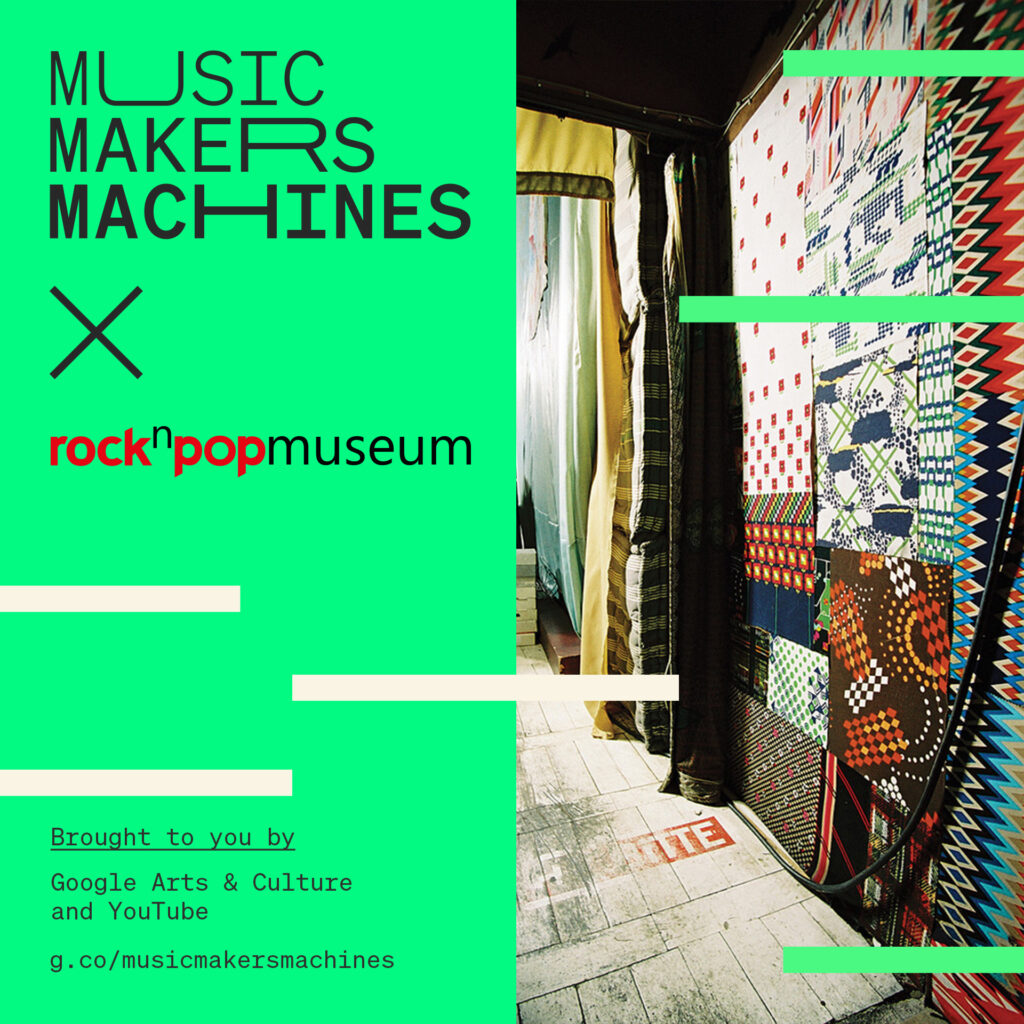
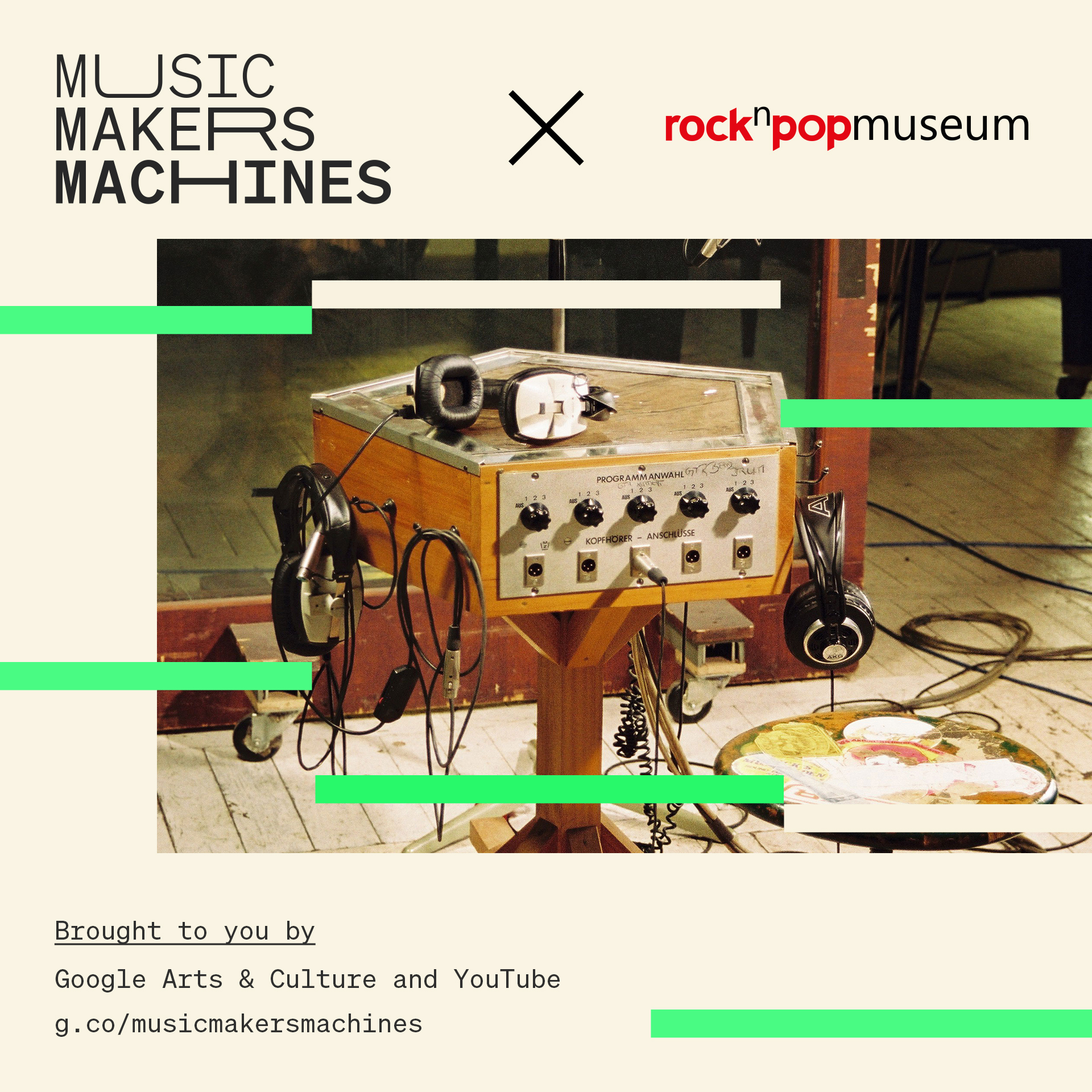
The rock'n'popmuseum is now also represented on Google Arts & Culture!
Gronau Inside
- is the first port of call for information and tourist tips on Gronau and the surrounding area.